
Neurodiversity and the museum: Enabling equitable digital access to national public literacy through design

Transforming Museum Experiences for Neurodivergent Communities
Campus Plus is pleased to announce the commencement of an Australian Government Department of Education's National Industry PhD project that brings together RMIT University and the National Museum of Australia.
Project Overview:
Our project, Helping cultural institutions create digital environments reflective of audience neurodiversity, explores ways galleries, libraries, archives, and museums can make digital content more accessible to neurodivergent audiences. Using a transdisciplinary, disability-led design approach, we aim to improve access to cultural heritage in Australia and beyond while uplifting skills in the museum sector.
Collaborative Approach:
RMIT College of Design and Social Context, School of Design brings deep expertise in design research partnerships for access and equity, as part of international leadership in practice-based research (#1 for Art & Design in Australia, #18 internationally, QS 2024). The National Museum of Australia contributes one of Australia’s largest online museum audiences and a digital uplift program to develop best-practice guidance for institutions seeking to respect, respond to and be shaped by neurodiverse experiences.
Value for Industry:
Museum audiences are bigger online than onsite, and neurodivergent-identifying people comprise a significant proportion of digital visitors. Neurodivergent-led design principles will foster affirming, respectful, collaborative, and enjoyable online visits, enhancing how neurodivergent individuals engage with and contribute to museum collections, programs, and spaces.
Value for Academia:
The project supports skills uplift in Australia’s culture sector, advancing disability-led approaches to accessibility and equity in digital transformation. It aligns with RMIT’s mission to empower communities through inclusive, impactful research and education.
Student Perspective:
Jorge Arreola says, "After five years of working in the GLAM sector, I know how rare it is to find opportunities that focus on accessibility design in galleries and museums. Which is why I’m so excited about my National Industry PhD. This partnership allows me to research how we can design experiences that embrace the diversity of bodies and minds when it comes to museum experiences. I’m deeply grateful to the NIPHD program and my supervisory team for supporting this work, and I look forward to creating impactful outcomes in accessibility-focused design."
Project Outcomes/Impact:
By generating viable, desirable products and guidelines for online content accessible to neurodivergent audiences, the project supports digital inclusion. Disseminating these guidelines will also contribute to workforce upskilling in design for accessibility, helping the cultural sector provide meaningful, accessible experiences for all.
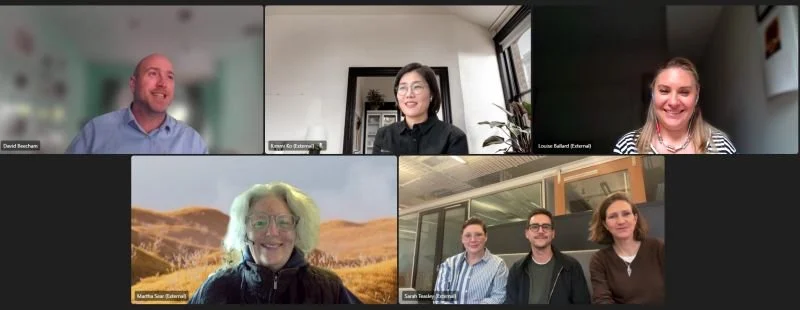
Sarah Teasley, Kimmi Ko, Fayen d'Evie, Martha Sear and Lyndon Anderson.