
Optimising Sponge Propagation and Production Techniques for Environmental Restoration and Commercial Aquaculture
Marine sponges are one of the most overlooked assets in ocean restoration—and one of the most promising.
We’re advancing a new project focused on developing scalable methods for sponge propagation and production to support both environmental restoration and commercial aquaculture. Despite their ecological importance and a global sponge-related bioproduct market exceeding $500 million annually, sponge restoration in Australia remains in its infancy, with no established commercial aquaculture sector.
Supported by the Australian Government Department of Education's National Industry PhD Program, this project is being delivered by Seagen Aquaculture and Deakin University, in partnership with the Marine Bioproducts CRC and Offshore Biotechnologies.
By overcoming key hatchery bottlenecks, we aim to establish new production pathways for temperate marine sponges—unlocking their potential for water filtration, habitat enhancement, and high-value bioproducts. The project will also explore novel applications across environmental and commercial domains, contributing to a stronger, more diversified blue economy in Australia.
Sponges are not just part of the ecosystem—they are an underutilised asset with the potential to drive both environmental outcomes and commercial value at scale.
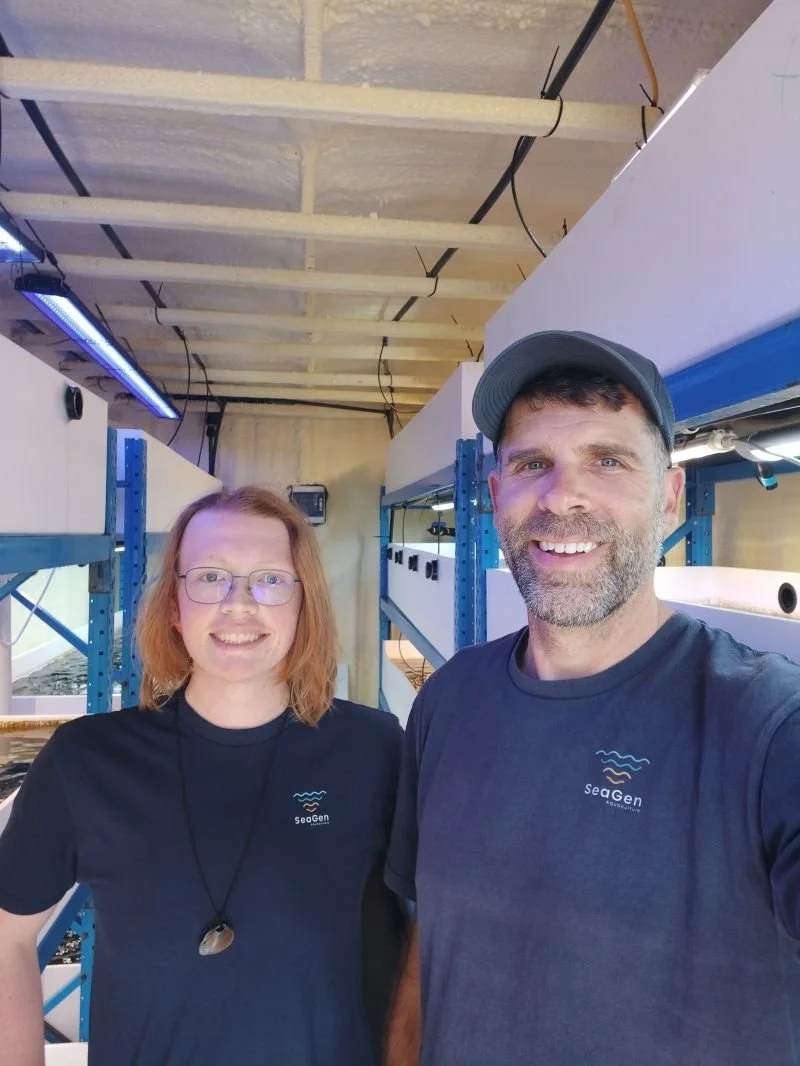
Welcome Evan Worden to the team!
This project is being overseen by Prof Daniel Ierodiaconou, Prof David Francis and Dr Chris Gillies