
Investigating the Impact of MTHFR Genetic Variations on Brain Electrical Activity: A qEEG Study

It was such a pleasure for Campus Plus to meet the team from TMS IP Pty and University of the Sunshine Coast and launch a new industry-focused PhD project bringing together academic expertise and industry insights to drive innovation and deliver real-world impact.
Leveraging the University of the Sunshine Coast's renowned expertise in medical research translation and TMS IP's industry leadership in transcranial magnetic stimulation research, this project epitomises a collaborative approach that bridges the gap between academia and industry.
The project, titled "Investigating the Impact of Genetic Variations on Brain Electrical Activity" focuses on using brainwave pattern analysis and genetic analysis in autism/ADHD to establish linkages, advancing diagnostic technologies benefiting public health outcomes, but also improving commercial outcomes for TMS IP.
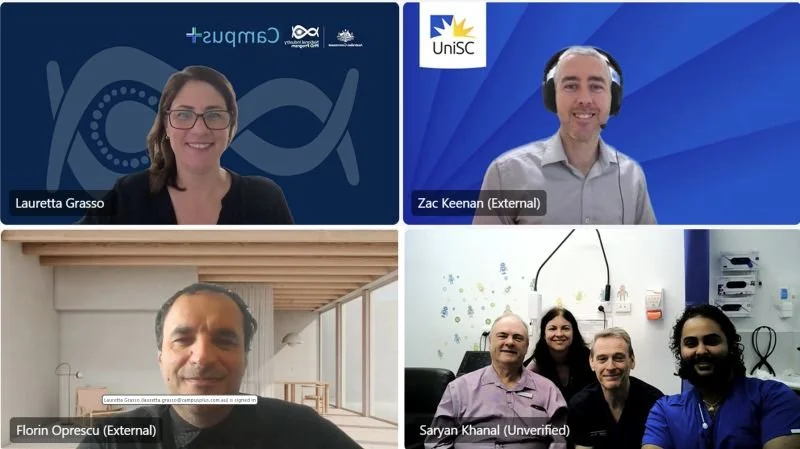
From PhD Candidate Saryan Khanal "This opportunity offers a rare chance to not just advance scientific knowledge, but potentially change how we understand, diagnose, and support individuals with autism and ADHD. To contribute to work that may directly translate into better outcomes for patients is both a responsibility and a privilege, which ultimately drives my passion for this project".
“This project brings cutting-edge science directly into clinical relevance. Our collaboration ensures that the outcomes are not only scientifically robust but also tailored for real-world implementation” states Dr Evan Jones, Director TMS IP and Industry Supervisor.
A/Prof Florin Oprescu, Academic Advisor adds "This National Industry PhD provides an outstanding opportunity for strengthening industry-university collaborations and for innovation in the PhD space."
Big thanks to Zac Keenan and Shauna Fjaagesund, C.Dir. for your key involvement in establishing this collaboration.